3 pages from the guide: the cover, the contents (100 questions in 9 sections) and one complete question with its answer, code and interview tips.
Strings look simple until the interviewer asks what new String("a") == "a" prints, or why your code breaks on emoji. This guide covers everything about Java strings that comes up in interviews: the string pool and interning, immutability and memory, every important method, StringBuilder and concatenation, Unicode and charsets, regular expressions, and 31 string coding problems with solutions.
100 questions in 9 sections, 99 code examples and 15 diagrams in a 107-page PDF (2026 edition).
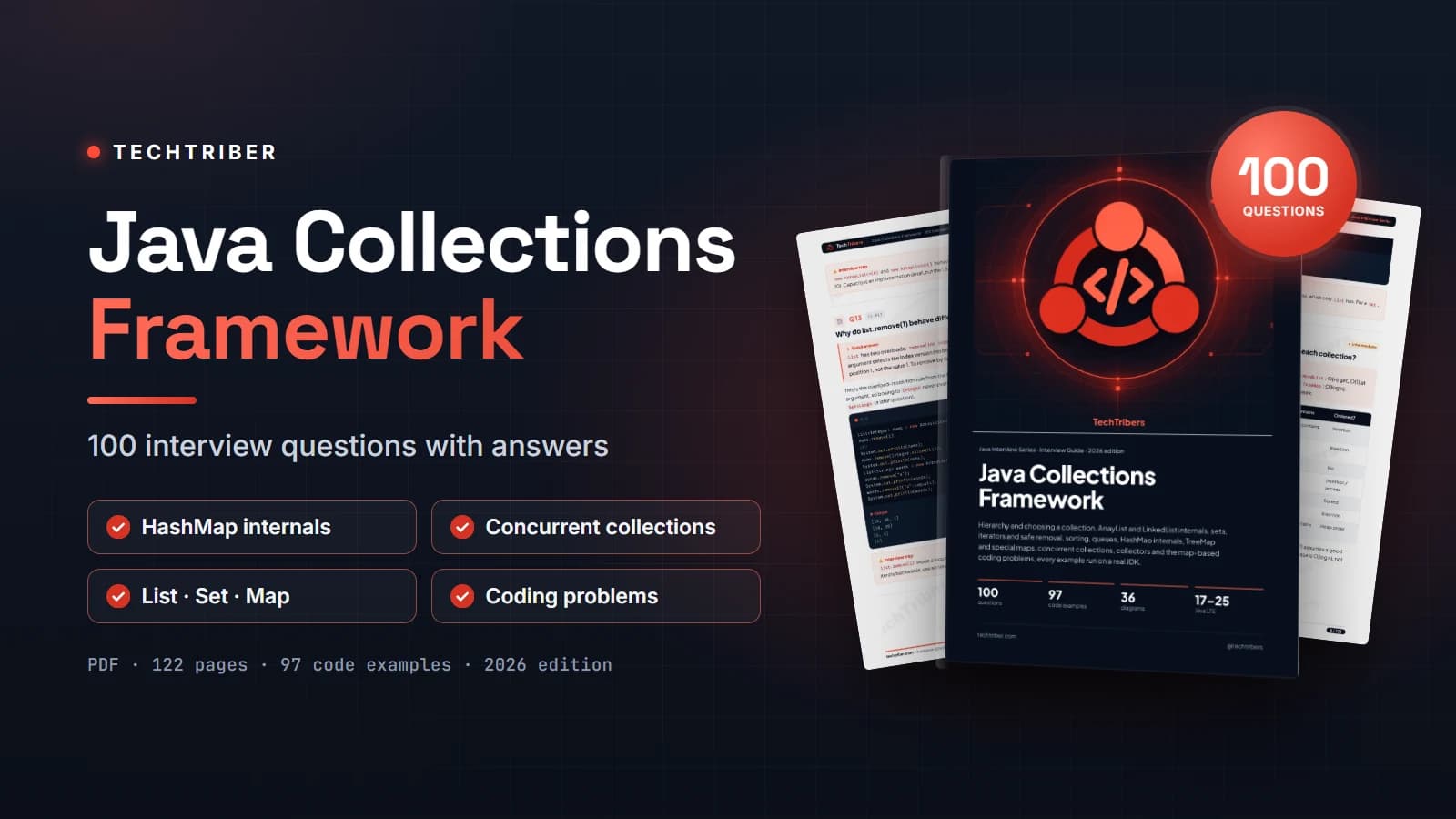
100 Java Collections Framework interview questions with detailed answers, code examples and performance tips.
No reviews yet
Predict the output of every snippet before reading the answer. Then solve the 31 coding problems on your own, and use the best-practices section as a checklist for code reviews.
== compares references. Literals and constant expressions are pooled (so == is true), while new String(...), runtime concatenation and most method results are fresh objects (so == is false) until you intern() them. Operands that are final variables initialised with constants are still constants.
It is a digital download (PDF). After payment it appears in your Library right away.
It covers this topic in depth. It is one topic from the TechTribers Java Interview Series, which has all 23 parts (1,200+ questions) in one bundle.
No reviews yet — be the first to review this product.
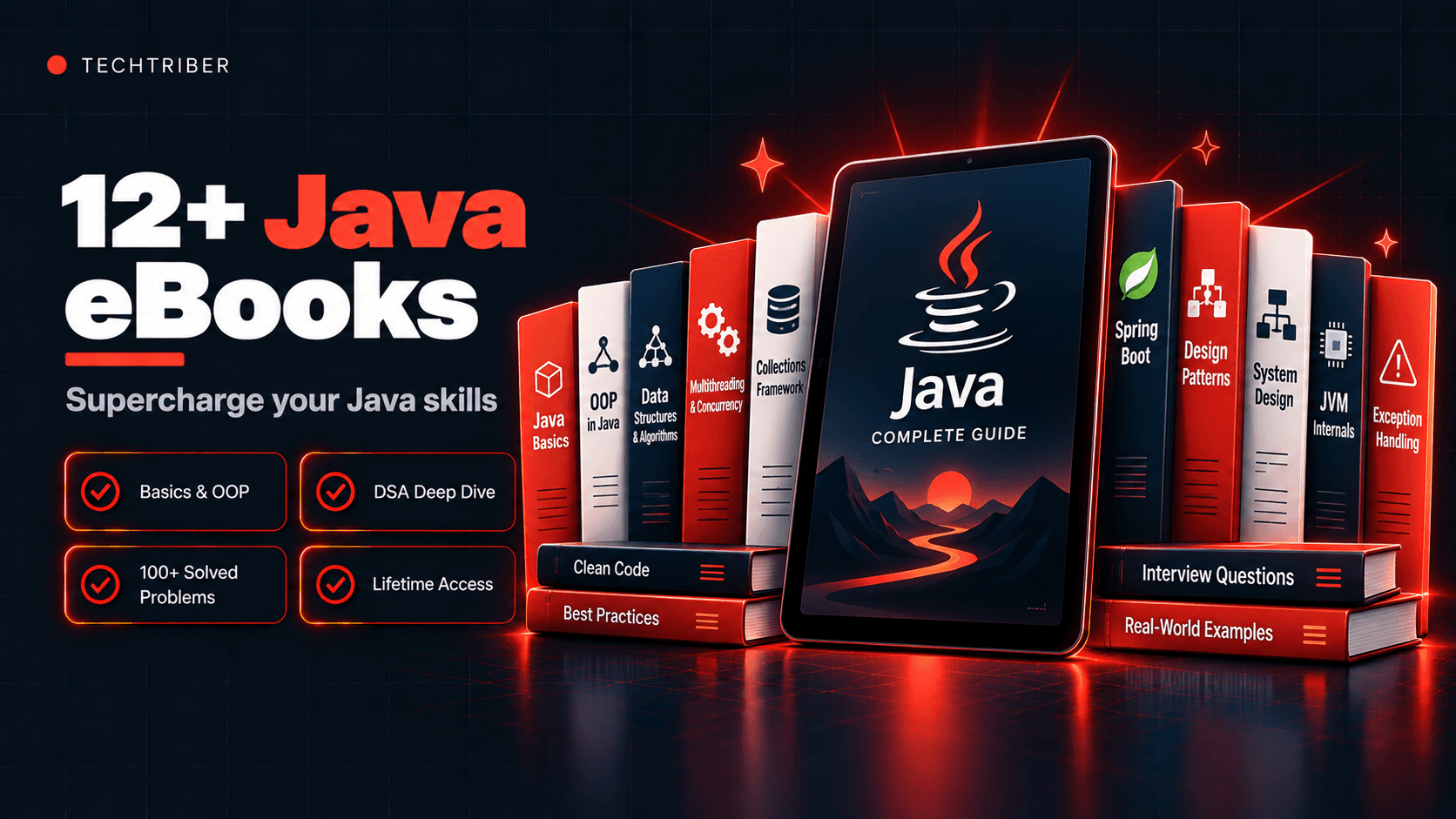
A library of 12+ Java e-books covering basics, OOP, DSA, problem solving and interview prep.
No reviews yet
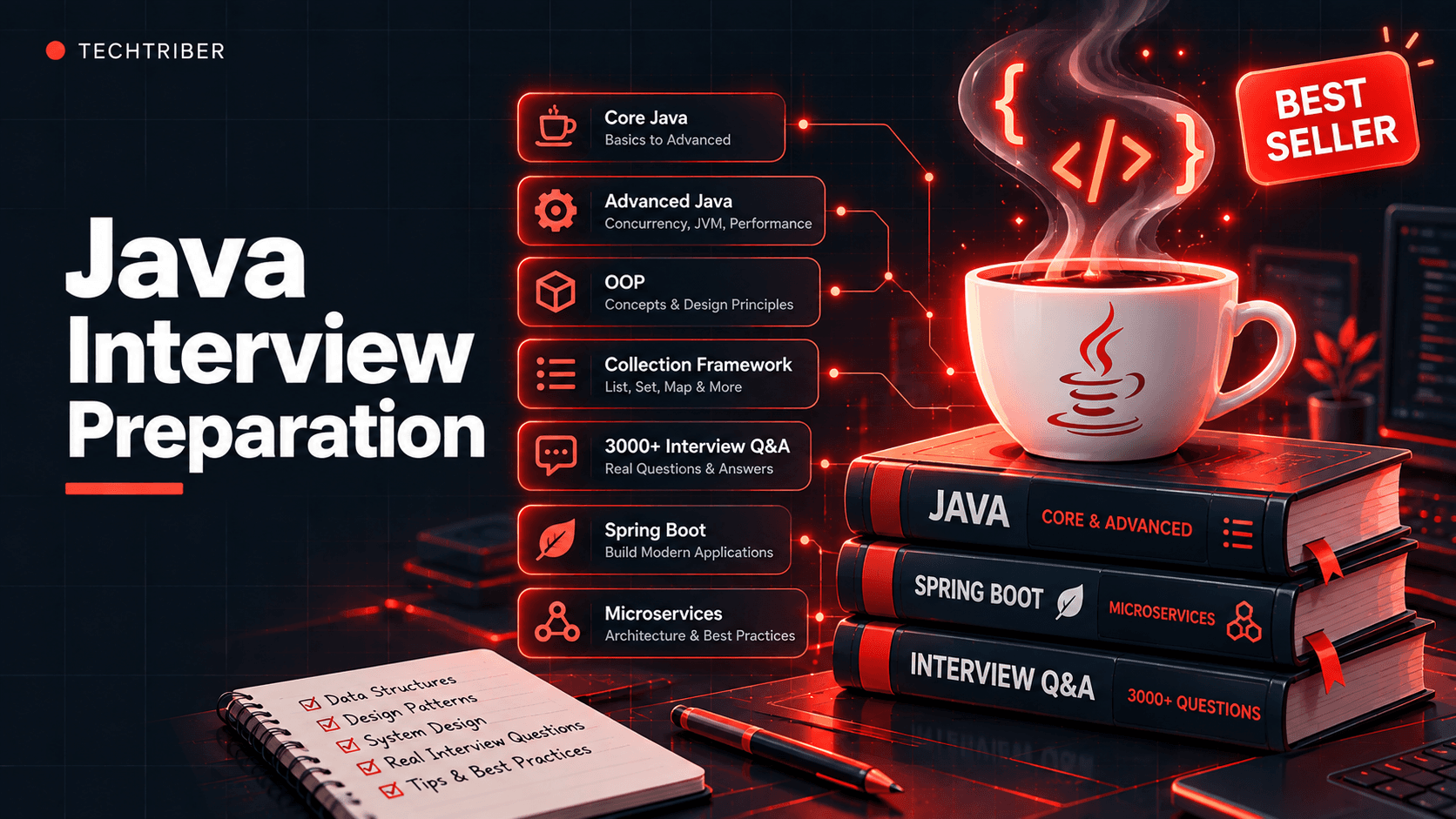
The all-in-one Java bundle: 3000+ interview questions, 50+ e-books, 500+ coding problems, DSA notes and bonus courses.
No reviews yet
 Tech Tribers