5 pages from the guide: the cover, the contents (60 questions in 9 sections) and three pages of real questions with answers, code and interview tips.
Kubernetes troubleshooting rounds rarely stop at "how do you debug CrashLoopBackOff": the interviewer describes a symptom and wants to hear which command you run, what its output tells you and how you stop it happening again. This guide answers 60 such scenarios in nine sections: pods that never start (Pending, ImagePullBackOff, CrashLoopBackOff, CreateContainerConfigError); resources (OOM kills, CPU throttling, evictions, quotas and LimitRanges); probes and rollouts; networking with Services, DNS, NetworkPolicy, Ingress and the Gateway API; storage and access modes; config and secrets; nodes, drains and taints; Helm and Argo CD; and RBAC and security. Every scenario was reproduced on kind v0.33.0 clusters on Docker Desktop, running Kubernetes 1.37.0 (kubectl 1.36.1, Helm 4.3.2, Argo CD 3.6.3), and the events, describe output, logs and rollout messages shown are the real ones. Where kind differs from a cloud cluster (cgroup v1 on Docker Desktop's VM, no cloud load balancer, local-path storage, QEMU emulation for other CPU architectures), the answer says so.
DevOps
A complete DevOps learning resource with coded examples, command sheets and an 80+ title book bundle across AWS, Azure and GCP.
DevOps
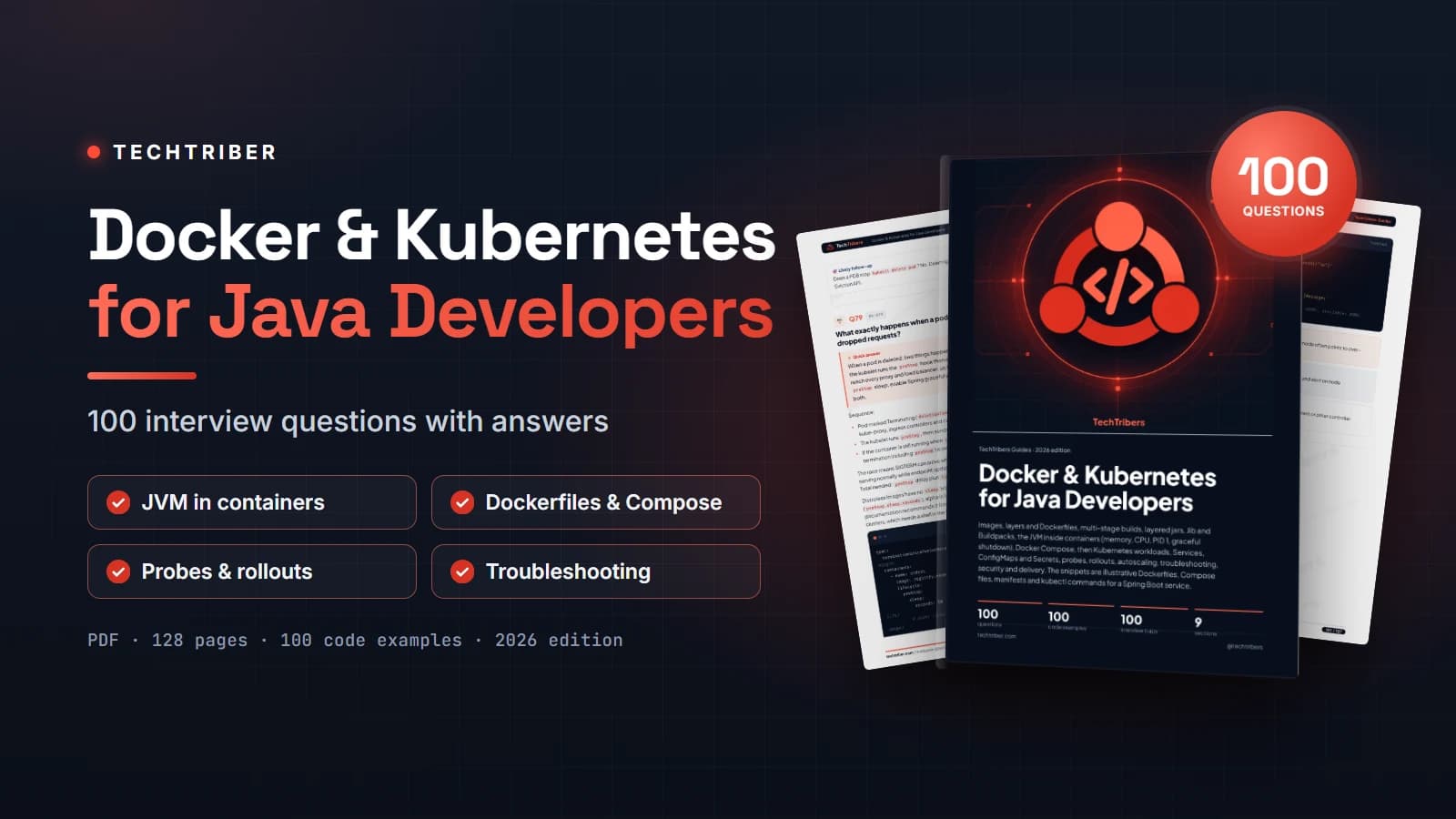
100 Docker and Kubernetes interview questions for Java and Spring developers: Dockerfiles, the JVM in containers, Compose, Pods, probes, rollouts, troubleshooting and security.
DevOps
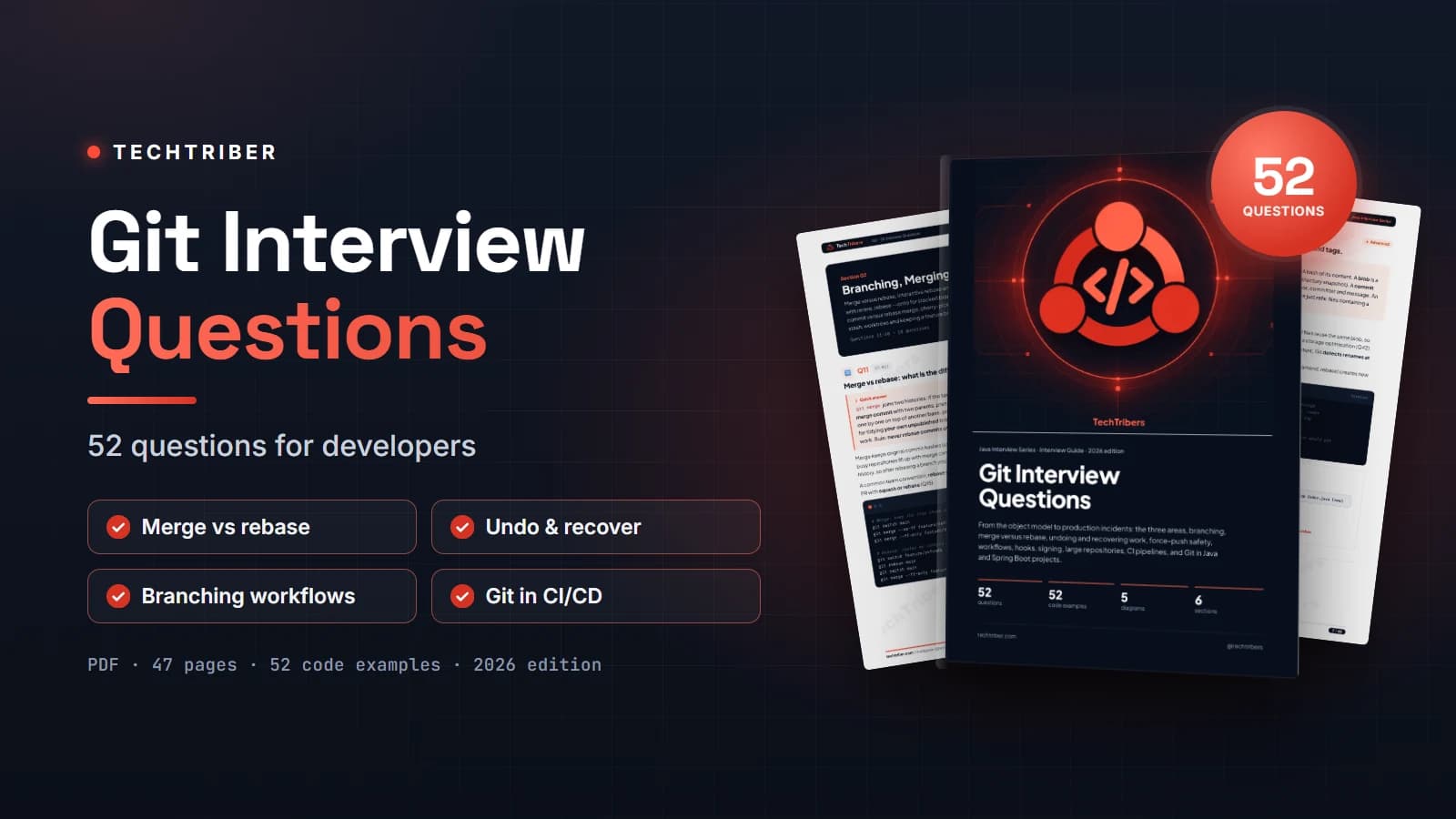
52 Git interview questions: the object model, branching, merge vs rebase, undoing and recovering work, workflows, hooks and Git in CI/CD.
60 questions in 9 sections, 60 code examples in a 134-page PDF (2026 edition).
Read the symptom, say aloud which commands you would run and what you expect them to show, then compare with the real output and the explanation. Re-create the scenarios on a local kind cluster; most need one node and a few busybox or nginx pods. Use the trap and follow-up lines to rehearse the second and third question an interviewer asks.
Read the container's CFS counters: on cgroup v1 /sys/fs/cgroup/cpu/cpu.stat (nr_periods, nr_throttled, throttled_time in nanoseconds), on cgroup v2 /sys/fs/cgroup/cpu.stat (nr_throttled, throttled_usec). If nr_throttled grows with load, the kernel is pausing the container because it used its quota (20 ms per 100 ms period for 200m). In the run, the same CPU-bound work took 5.60 s with the limit and 1.78 s without it, and throttling counted 57 of 87 periods. Raise or remove the CPU limit and keep the request.
It is a digital download (PDF). After payment it appears in your Library right away.
It covers this topic in depth. Other TechTribers guides cover related topics: browse all guides.
No reviews yet — be the first to review this product.
 Tech Tribers