3 pages from the guide: the cover, the contents (60 questions in 7 sections) and one complete question with its answer, code and interview tips.
Designing an API well is where backend interviews move past annotations: which status code, how to retry a payment safely, how to paginate a feed that keeps changing, how to change a contract without breaking clients. This guide answers 60 questions on REST and HTTP fundamentals, resource design and versioning, Spring MVC in practice (Bean Validation, ProblemDetail error handling, Jackson, dates), collections and caching, reliability patterns, and cross-cutting topics such as OpenAPI, CORS, RestClient and MockMvc testing. Code examples target Spring Boot 3.x and mention what changes in Spring Boot 4.
60 questions in 7 sections, 59 code examples in a 83-page PDF (2026 edition).
A 52-page print-friendly guide to the Spring Boot annotations you actually use, with copyable code and interview questions.
No reviews yet
Read each quick answer aloud as if answering an interviewer, then open the code and explain it. Take one of your own endpoints and check it against the status-code, validation, pagination and idempotency sections.
Make the operation idempotent with an idempotency key: the client generates a unique Idempotency-Key (a UUID) per logical payment and sends the same key on every retry. The server stores the key with the outcome; a repeat with the same key and same payload returns the stored response instead of charging again, and the same key with a different payload is rejected.
It is a digital download (PDF). After payment it appears in your Library right away.
It covers this topic in depth. It is one topic from the TechTribers Java Interview Series, which has all 23 parts (1,200+ questions) in one bundle.
No reviews yet — be the first to review this product.
500+ curated Spring Boot interview questions by difficulty, with detailed answers, coding challenges and cheat sheets.
No reviews yet
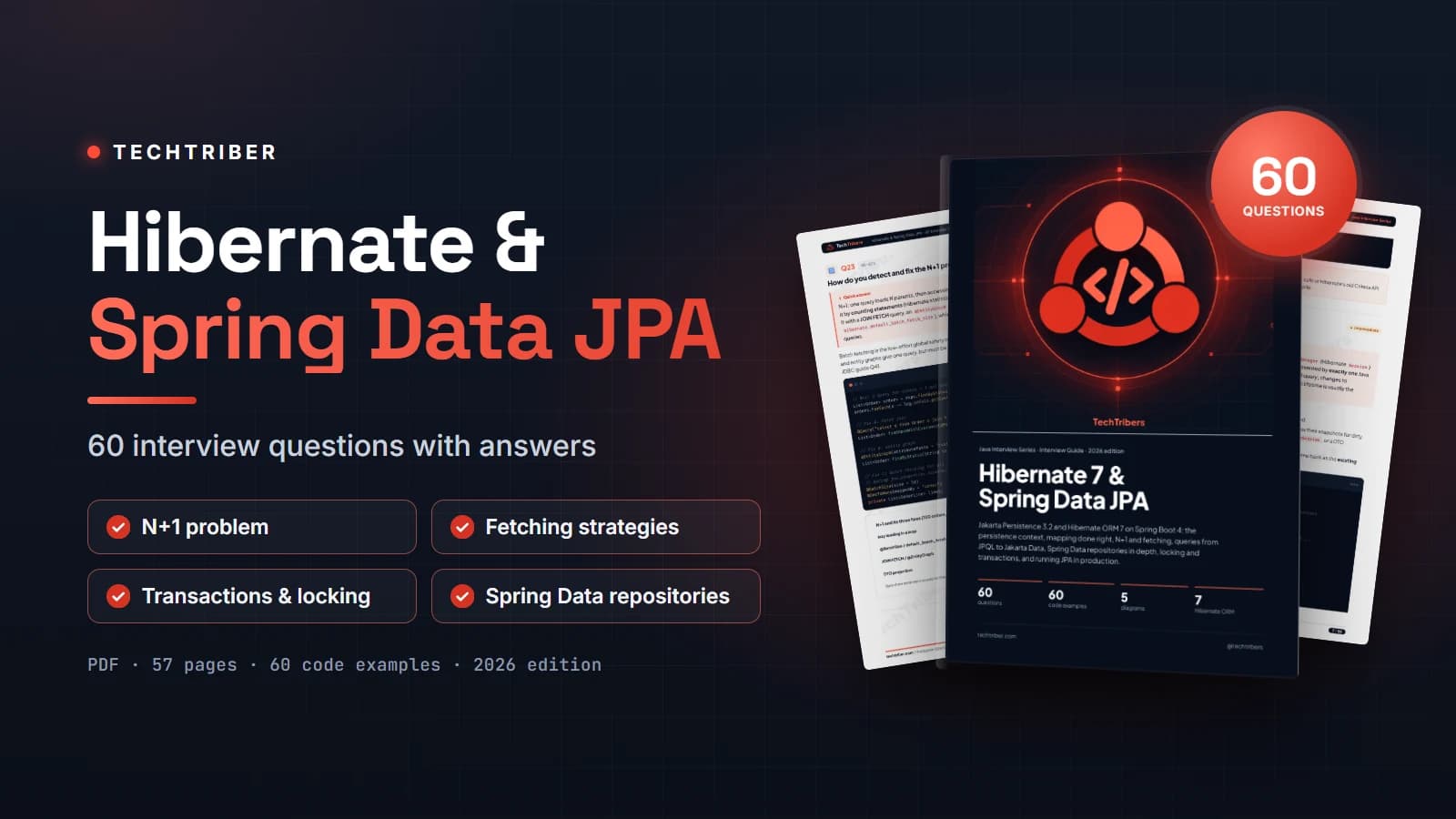
60 Hibernate and Spring Data JPA interview questions: the persistence context, mapping, N+1 and fetching, queries, repositories, transactions and locking.
No reviews yet
 Tech Tribers