 Tech Tribers
Java Interview Preparation: A 30-Day Roadmap for 2026
A day-by-day plan for Java interview preparation: core Java, collections, Java 8+, multithreading, Spring Boot, microservices, SQL and DSA, with two mock interviews at the end.
New6 min read
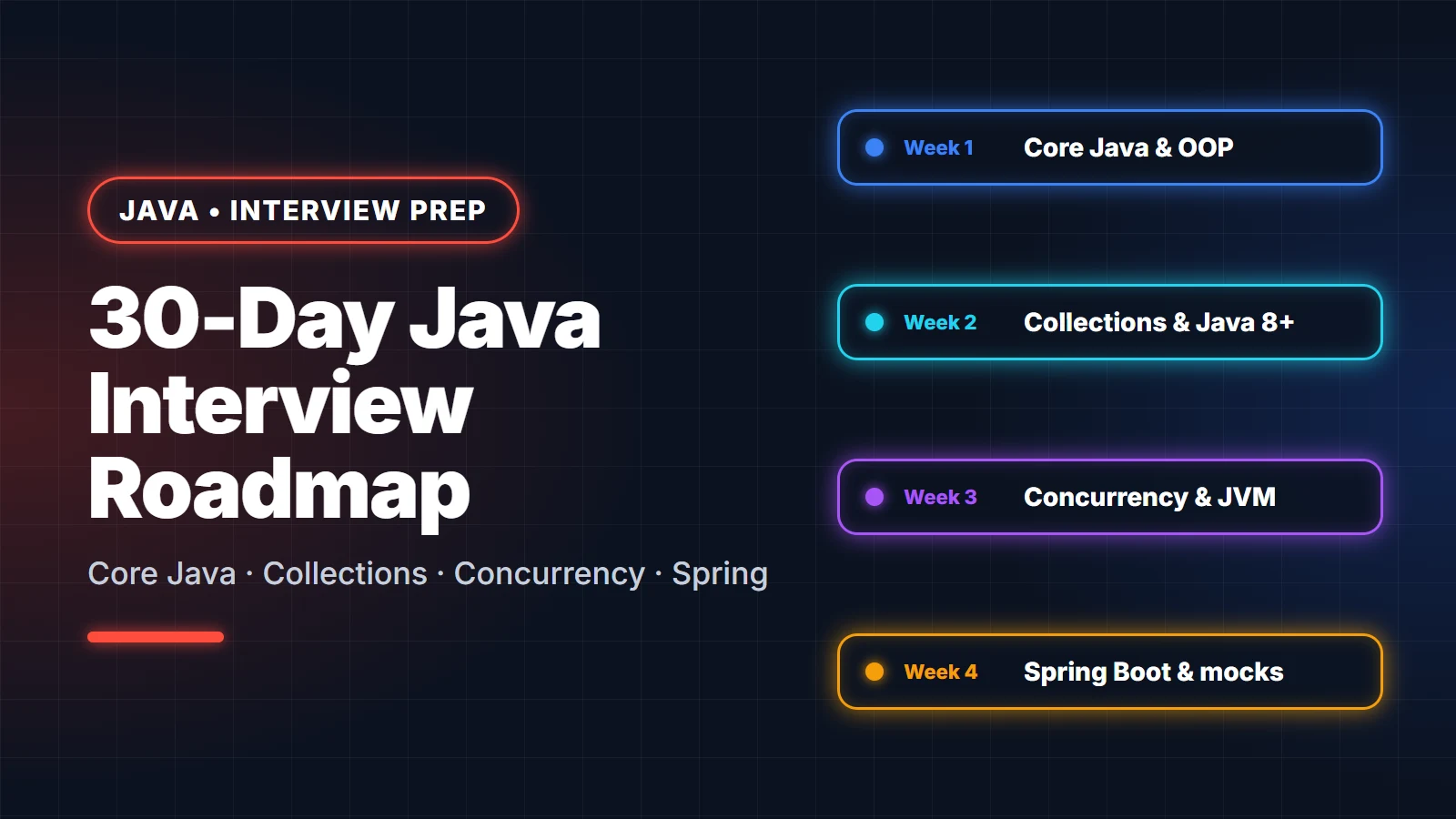
Most Java interview preparation fails for one reason: it has no order. People read about Spring Boot before they can explain how a HashMap works, then freeze on the basics. This roadmap fixes the order. In 30 days, at about two to three hours a day, it takes you from core Java to Spring Boot, with an hour of data structures and algorithms (DSA) every day and two mock interviews at the end.
It is written for developers with zero to five years of experience. If you have more, keep the order and spend longer on concurrency, Spring Boot internals and system design.
What Java interviews actually test
Whatever the company, the rounds draw from the same pool:
- Core Java and OOP – strings, immutability, interfaces, exceptions,
equalsandhashCode. - Collections – which collection to use and why, and how
HashMapworks inside. - Java 8 and later – lambdas, streams,
Optional, records. - Multithreading and concurrency – the topic that separates candidates.
- Spring Boot and microservices – for almost every backend role.
- SQL – joins, indexes and one "top N per group" query.
- DSA – one or two coding problems, usually arrays, strings, hashing or trees.
- System design – from about three years of experience onwards.
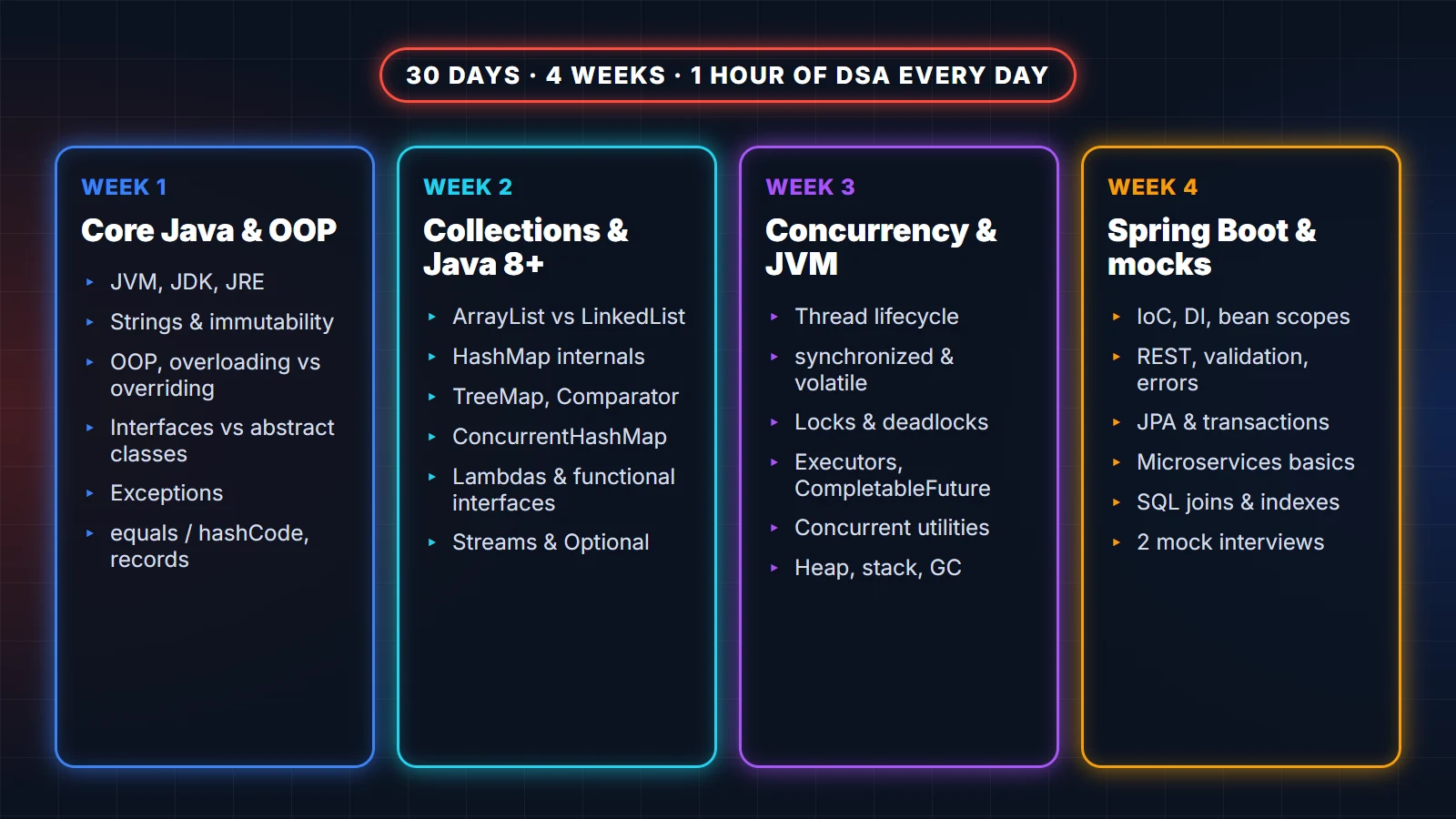
Week 1: core Java and OOP
- Day 1 – How Java runs. JVM, JDK and JRE; compiling to bytecode; primitive types, wrapper classes and autoboxing.
- Day 2 – Strings. Immutability, the string pool,
==versusequals,StringBuilder. - Day 3 – OOP. The four pillars with your own examples, overloading versus overriding,
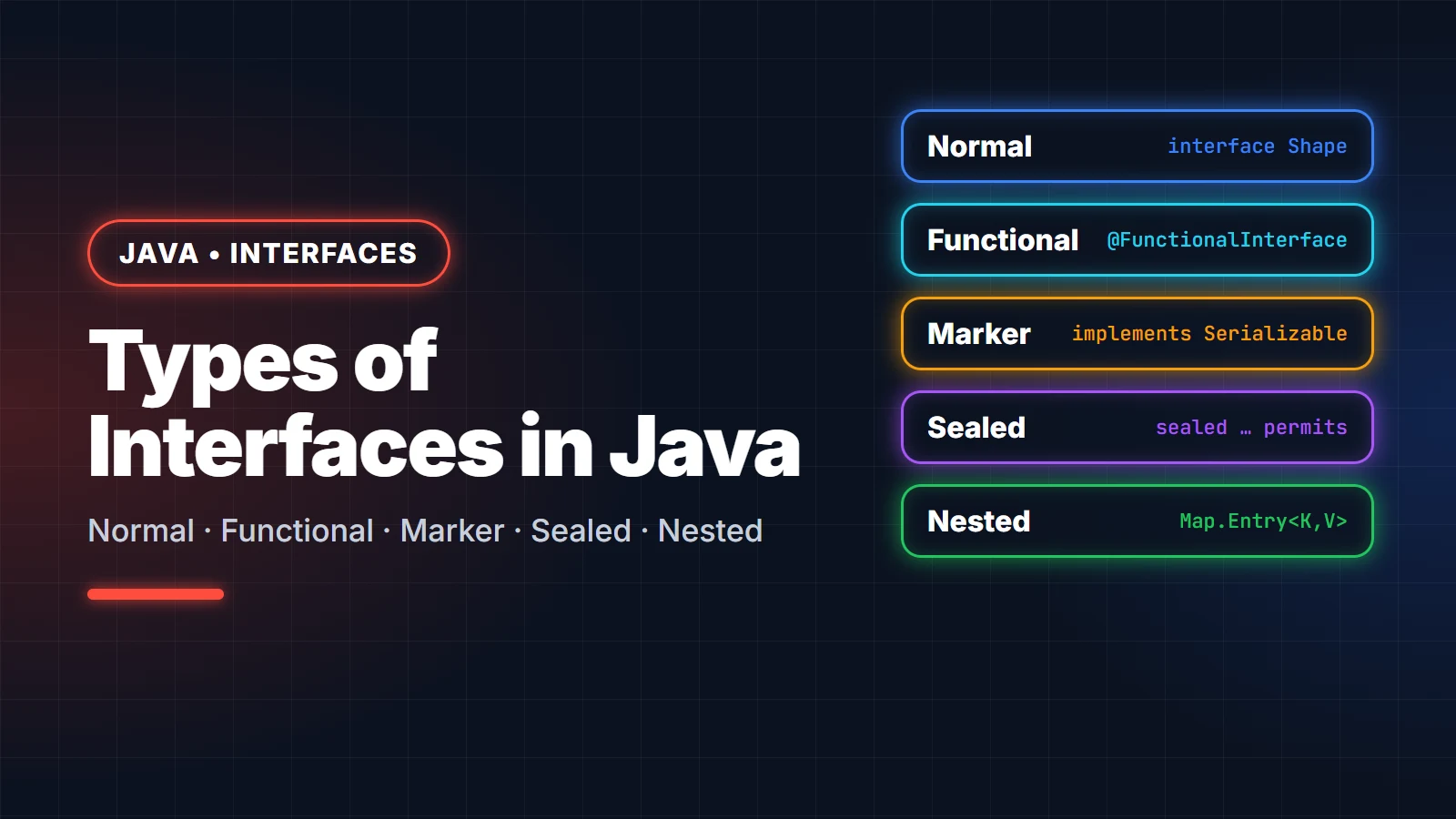
staticandfinal. - Day 4 – Interfaces and abstract classes. Default, static and private methods; functional and marker interfaces. Start with types of interfaces in Java.
- Day 5 – Exceptions. Checked versus unchecked,
try-with-resources, custom exceptions, whatfinallyreally guarantees. - Day 6 – Object contracts.
equalsandhashCode, immutable classes, records. - Day 7 – Review. Answer 30 core-Java questions out loud, without notes. Mark the ones you hesitated on.
Week 2: collections and Java 8+
- Day 8 – Lists.
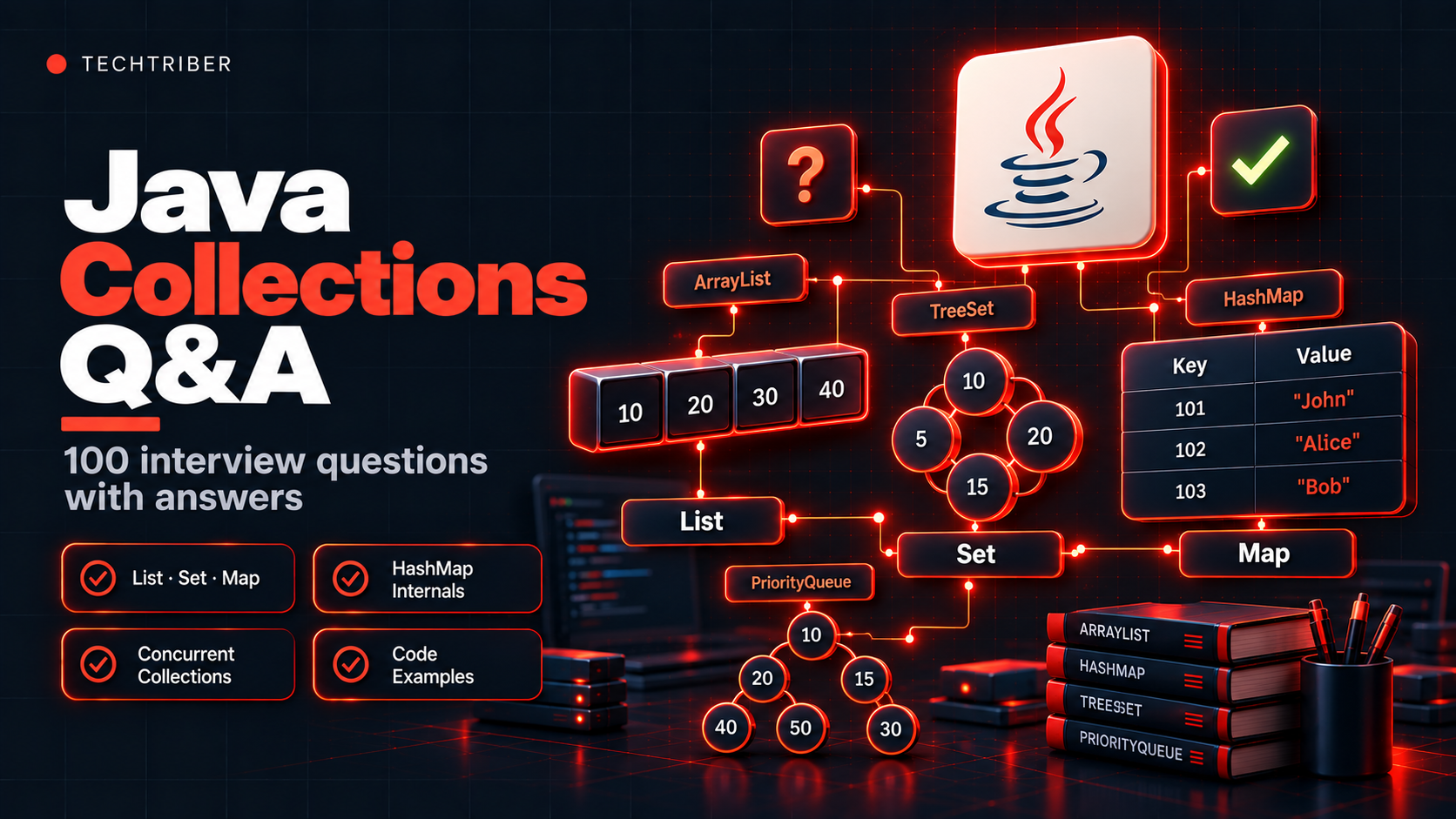
ArrayListversusLinkedList, and whyArrayListwins almost every time. - Day 9 – HashMap internals. Hashing, buckets, collisions, the switch from a list to a tree when one bucket passes eight entries (once the table has at least 64 buckets), the 0.75 load factor and resizing.
- Day 10 – Sets and sorted collections.
HashSet,TreeMap,ComparableversusComparator. - Day 11 – Concurrent collections.
ConcurrentHashMap, fail-fast versus fail-safe iterators. - Day 12 – Lambdas. Functional interfaces, method references, effectively-final variables.
- Day 13 – Streams.
map,filter,reduce,collect,groupingBy;Optionalused properly. - Day 14 – Review. Solve five stream problems from a blank file, such as "the second-highest salary per department".
// Day 13 warm-up: total order value per customer, highest first
Map<String, Long> totals = orders.stream()
        .collect(Collectors.groupingBy(Order::customer,
                 Collectors.summingLong(Order::amountPaise)));

totals.entrySet().stream()
        .sorted(Map.Entry.<String, Long>comparingByValue().reversed())
        .forEach(entry -> System.out.println(entry.getKey() + " " + entry.getValue()));
Week 3: multithreading, concurrency and the JVM
- Day 15 – Threads. The thread lifecycle,
RunnableversusCallable, why you rarely create threads yourself. - Day 16 – Visibility and locking.
synchronized,volatile, the happens-before rule. - Day 17 – Locks and deadlocks.
ReentrantLock, the four conditions for a deadlock, and how to avoid one. - Day 18 – Executors. Thread pools,
ExecutorService,CompletableFuture, virtual threads (Java 21). - Day 19 – Concurrency utilities.
AtomicInteger,CountDownLatch,Semaphore,BlockingQueue. - Day 20 – JVM memory. Heap, stack and metaspace, garbage collection basics, how memory leaks happen in Java.
- Day 21 – Review. Write a producer-consumer with a
BlockingQueue, then explain it as if to an interviewer.
Week 4: Spring Boot, microservices, SQL and mock interviews
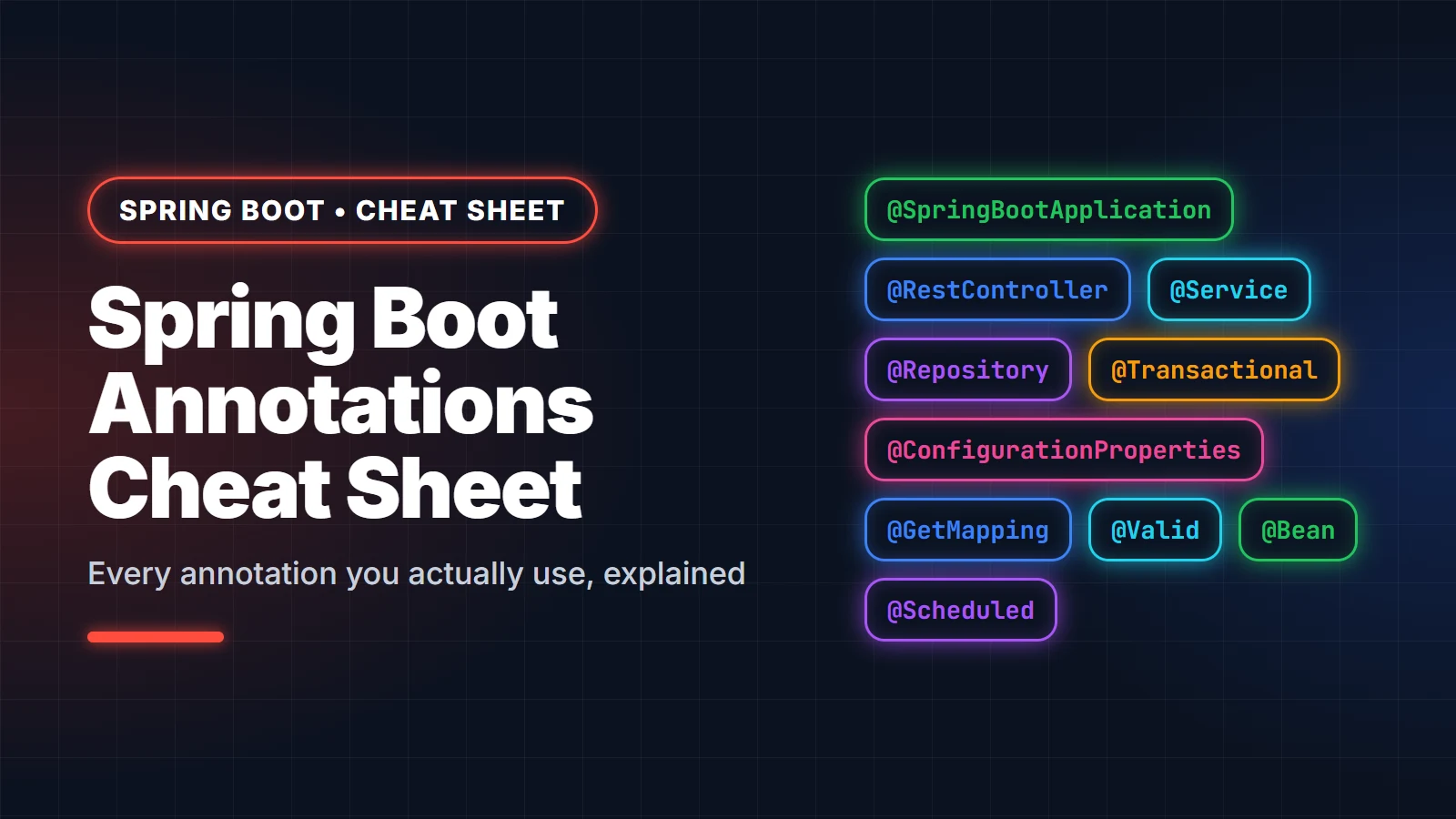
- Day 22 – Spring core. Inversion of control, dependency injection, bean scopes and the annotations behind them. Keep the Spring Boot annotations cheat sheet open.
- Day 23 – Spring Boot. Auto-configuration, profiles, REST controllers, validation, global error handling.
- Day 24 – Data. Spring Data JPA,
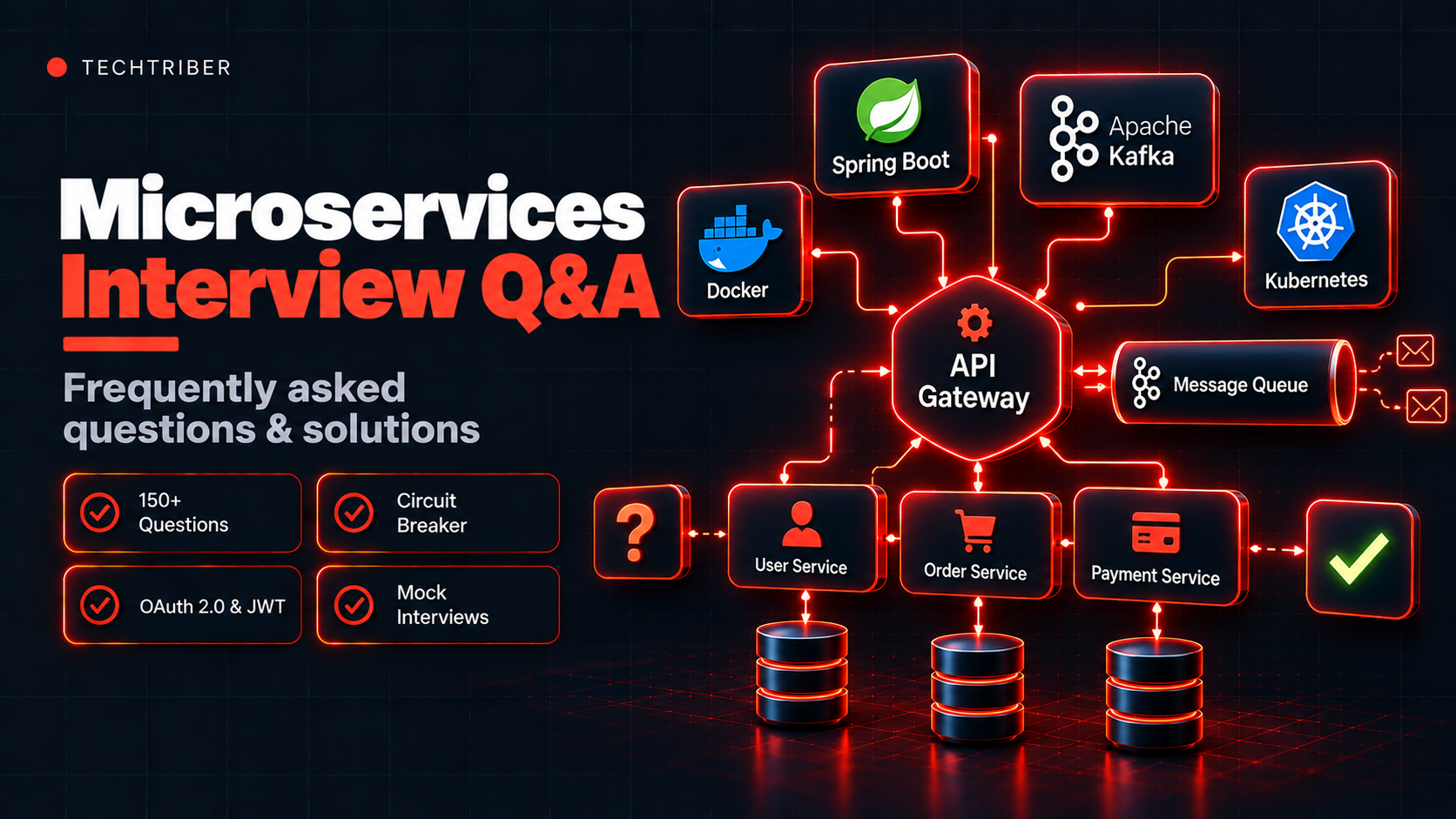
@Transactionaland its traps, the N+1 query problem. - Day 25 – Microservices. Service discovery, API gateways, circuit breakers, idempotency, retries.
- Day 26 – SQL. Joins, indexes,
GROUP BYwithHAVING, window functions for "top N per group". - Day 27 – System design basics. Caching, queues, and one classic problem such as designing a rate limiter (essential from three years of experience).
- Day 28 – Two mock interviews. One technical, one about your projects. Record them.
- Day 29 – Fix the gaps the mocks exposed.
- Day 30 – Light review. Rehearse a two-minute story about your best project, and rest.
The daily DSA hour
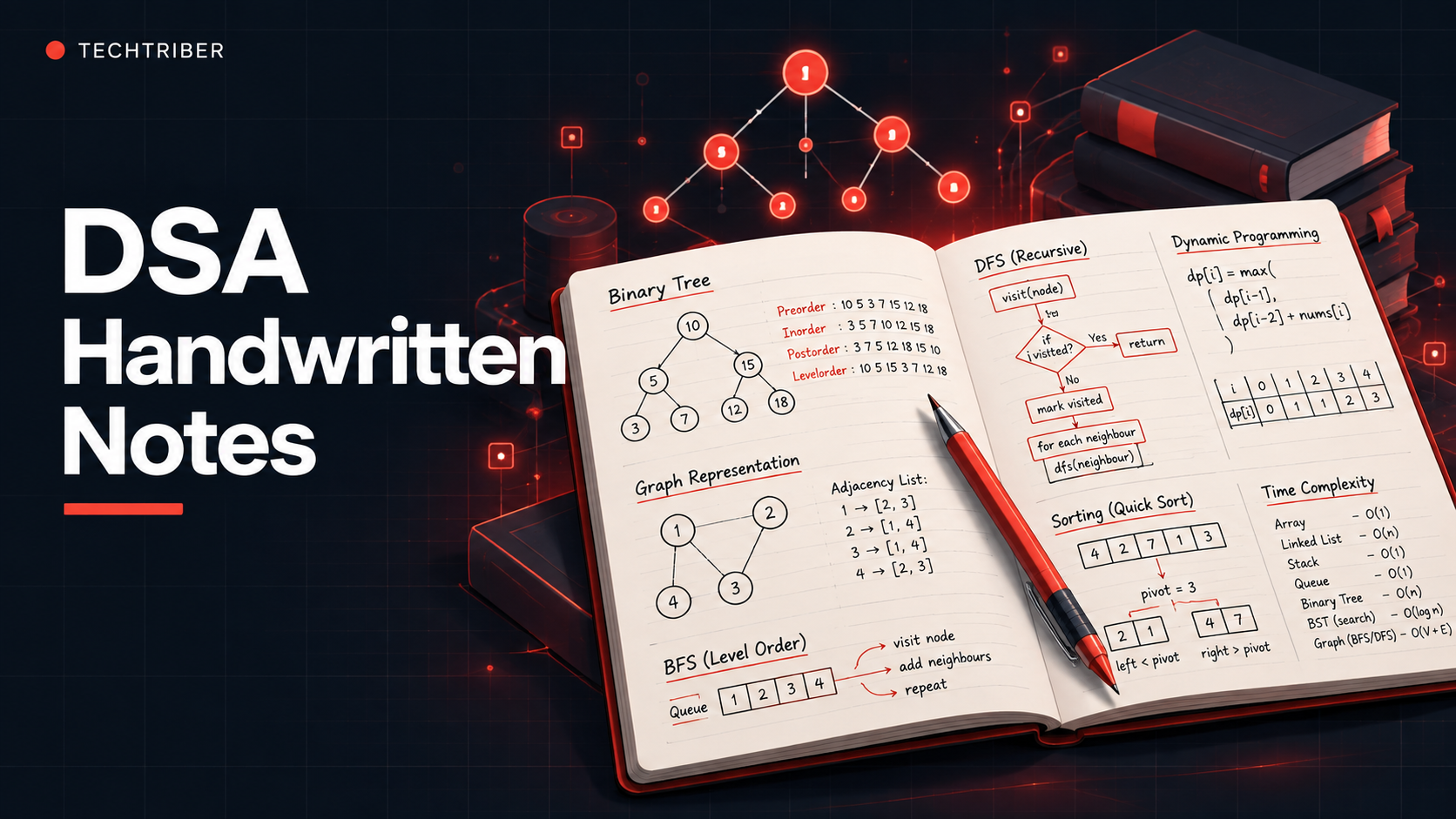
Alongside the topics above, solve one or two problems a day in this order: arrays and strings, hashing, two pointers, sliding window, stacks and queues, binary search, linked lists, trees, then basic graphs. Write each solution from a blank file, say its time and space complexity out loud, and re-solve anything you needed hints for three days later. Handwritten notes help here: DSA handwritten notes cover the patterns in revision-friendly form.
What a good Java interview course should cover
If you are comparing a Java interview preparation course or a training programme, check it against this list:
- Core Java and OOP with the why, not just definitions.
- Collections internals, especially
HashMapandConcurrentHashMap. - Java 8 to 21 features that interviews ask about: lambdas, streams, records, sealed types, virtual threads.
- A serious multithreading section with code, not only theory.
- Spring Boot and microservices questions from real interviews.
- Questions with model answers you can practise against, ideally hundreds of them.
- Something for revision in the last week: short notes or a cheat sheet.
How to practise so it sticks
- Answer out loud. Reading an answer feels like knowing it; saying it shows whether you do.
- Use spaced repetition. Revisit a topic one day, three days and a week after learning it.
- Code from a blank file. No IDE autocomplete for warm-up problems.
- Keep a mistakes list. Every wrong or slow answer goes on it; review it every evening.
- Tie answers to your project. "We used
ConcurrentHashMaphere because…" beats a textbook answer.
Common mistakes
- Jumping to Spring Boot before core Java and collections are solid.
- Memorising definitions without being able to give an example.
- Skipping concurrency because it is hard. It is exactly why it is asked.
- No mock interviews, so the first real interview is the practice run.
Resources for each week
- Weeks 1 and 2: Java Learning Resources: Interview Preparation and Complete Collections Framework Q&A.
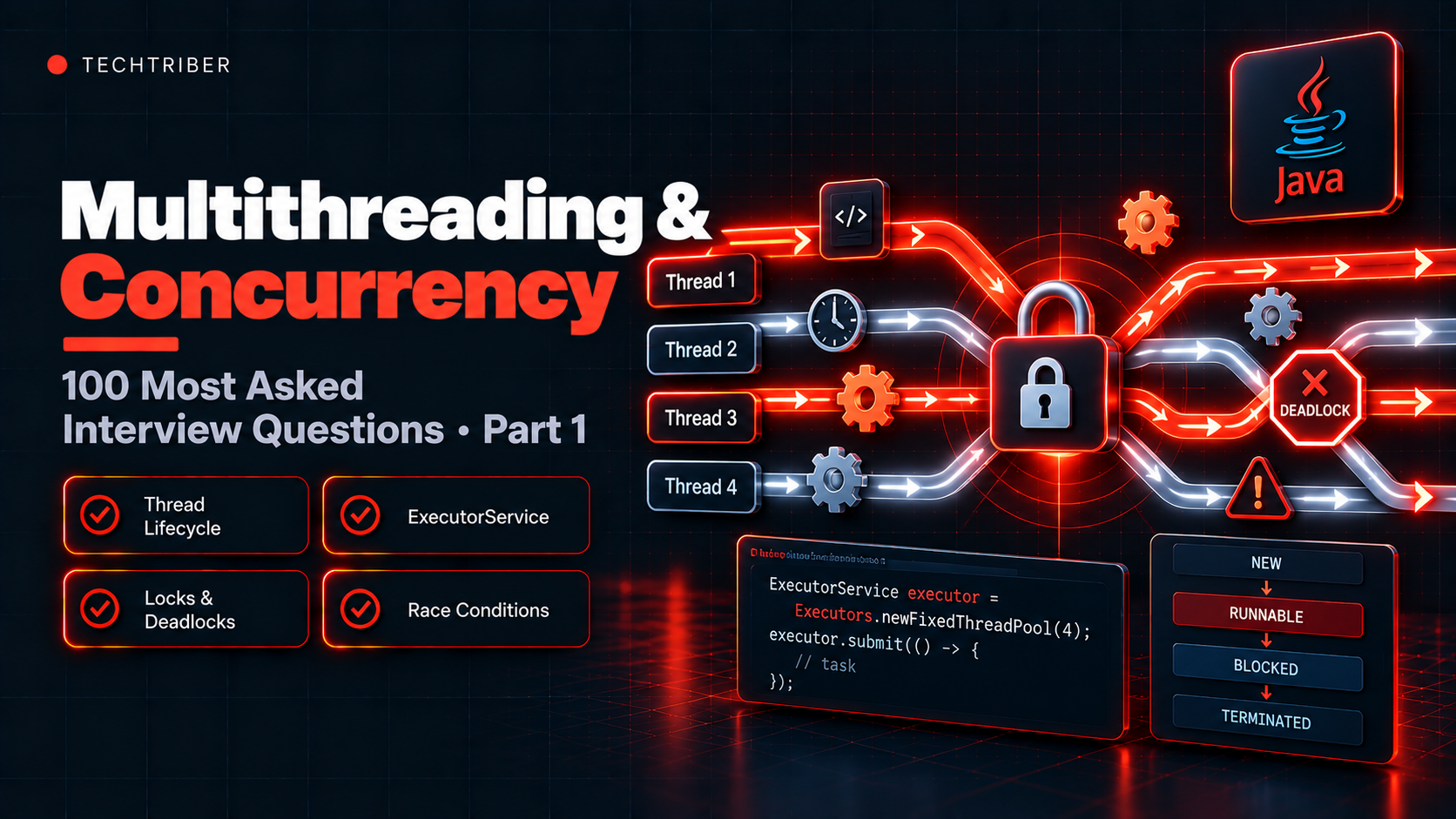
- Week 3: Java Multithreading and Concurrency: 100 most-asked interview questions.
- Week 4: Spring Boot interview questions and microservices interview questions.
- Every day: DSA handwritten notes, and thousands of questions with answers on prepare-java.techtriber.com.
Thirty days is enough to be ready if you keep the order and practise out loud. Good luck with the interview.